When choosing decorative metal trim, one of the most common questions from designers, contractors, and homeowners is:
Should I use aluminum trim or stainless steel trim?
Both materials are widely used in modern interior design, but each offers unique advantages.
This guide will help you compare durability, appearance, installation, applications, and cost—so you can confidently choose the best option for your project.
1.Understanding the Materials
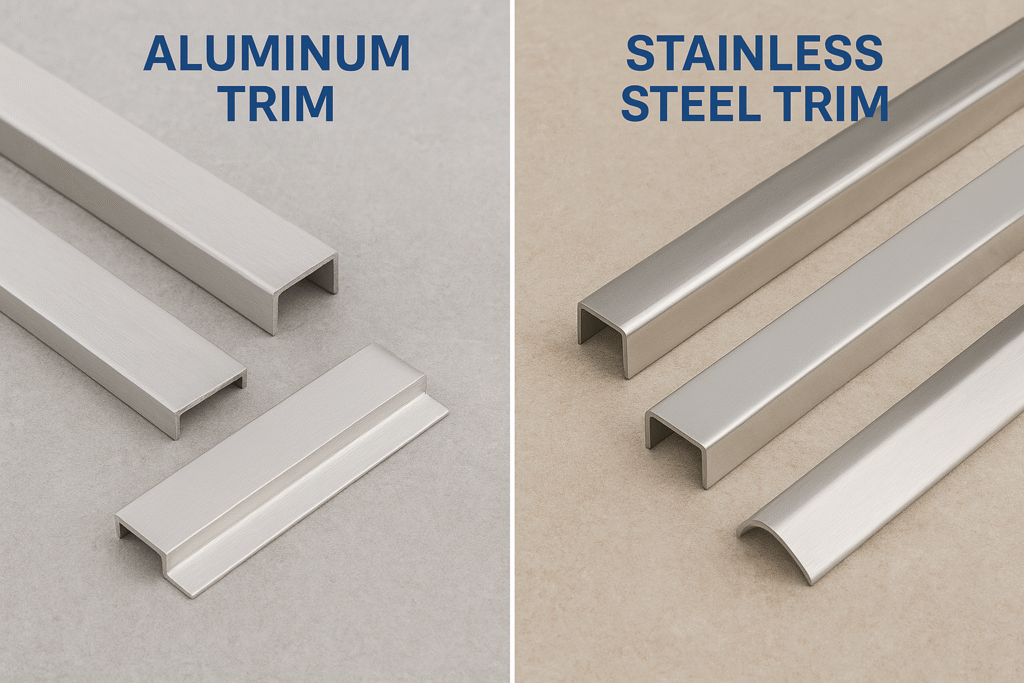
Aluminum Alloy Trim
Aluminum trim is made from lightweight aluminum extrusions and is known for its versatility and affordability.
It is a popular choice for interior decoration where aesthetics and ease of installation are priorities.
Stainless Steel Trim
Stainless steel trim is produced through precision forming and polishing, usually in SUS304 or SUS316 grade.
It is strong, corrosion-resistant, and ideal for high-end or heavy-duty applications.
2. Key Differences Between Aluminum Trim and Stainless Steel Trim
Durability
- Stainless Steel: Extremely strong, resistant to impact, moisture, and corrosion. Long lifespan.
- Aluminum: Strong enough for most indoor uses but softer than stainless steel.
Winner: Stainless Steel
Weight
- Aluminum: Lightweight, easy to handle, easier for installers.
- Stainless Steel: Heavier and more solid.
Winner: Aluminum
Surface Finishes & Colors
- Aluminum: Can achieve a wide range of finishes—anodized, powder coated, wood-grain transfer, brushed, matte, mirror, etc.
- Stainless Steel: Known for luxury PVD coatings (titanium gold, black, rose gold), brushed finishes, and anti-fingerprint options.
Winner: Both — depends on design taste
Cost
- Aluminum: More economical, ideal for large-volume projects or budget-sensitive customers.
- Stainless Steel: Higher cost due to material strength and PVD process.
Winner: Aluminum
Corrosion Resistance
- Stainless Steel: Top choice for kitchens, bathrooms, and high-humidity environments.
- Aluminum: Good corrosion resistance but less than stainless steel in extreme conditions.
Winner: Stainless Steel
Installation
- Aluminum: Easier to cut, drill, and install; suitable for DIY and fast projects.
- Stainless Steel: Requires more professional tools; harder to bend or cut.
Winner: Aluminum
3. Best Applications for Each Material
When to Choose Aluminum Trim
Aluminum is ideal for:
- Wall panel edges
- Ceiling decoration
- LED strip channels
- Furniture edge trim
- Light-duty interior finishing
- Budget-friendly commercial projects
When to Choose Stainless Steel Trim
Stainless steel performs best in:
- Tile finishing edges
- Bathrooms and wet areas
- Kitchens and countertops
- High-end hotels, villas, luxury retail
- Exterior applications
- Heavy-duty protection zones
4. Aesthetic Differences: Which Looks Better?
Aluminum Trim
- Modern, minimalist appearance
- Rich color options
- Smooth texture, lightweight feel
Stainless Steel Trim
- Premium, high-luxury aesthetics
- Deeper metallic tones
- Brushed, mirror, and PVD finishes with high color stability
Overall, aluminum = versatile aesthetic, stainless steel = luxury aesthetic.
| Feature | Aluminum Trim | Stainless Steel Trim |
| Material Cost | ★★★★☆ (low) | ★★☆☆☆ (high) |
| Durability | ★★★☆☆ | ★★★★★ |
| Installation | ★★★★★ | ★★★☆☆ |
| Weight | ★★★★★ | ★★★☆☆ |
| Corrosion Resistance | ★★★★☆ | ★★★★★ |
| Color Variety | ★★★★★ | ★★★★☆ |
| Luxury Appearance | ★★★☆☆ | ★★★★★ |
6. How to Decide: A Simple Guide
Use Aluminum Trim if your project requires:
Fast installation
Lower budget
Lightweight material
Decorative indoor finishing
Use Stainless Steel Trim if your project requires:
Maximum durability
Waterproof and corrosion resistance
High-end aesthetics
Heavy-duty or commercial application
7. Our Recommendations for Customers
1. For residential home renovation:
Use aluminum trim for walls and ceilings, and stainless steel trim for bathrooms and kitchens.
2. For hotels, offices, and commercial projects:
Use stainless steel for main exposed areas where durability matters.
3. For large-volume furniture or wall panel projects:
Use aluminum trim for lightweight, economic finishing.
8. There Is No “One Best Material”
Both aluminum and stainless steel trims are excellent choices—
the right material depends on your project’s purpose, design style, and budget.
If you need help choosing the most suitable trim, our team can recommend the best profile and finish based on your project drawings.
Need help choosing aluminum or stainless steel trim?
Contact us for samples, catalogs, and professional project advice.