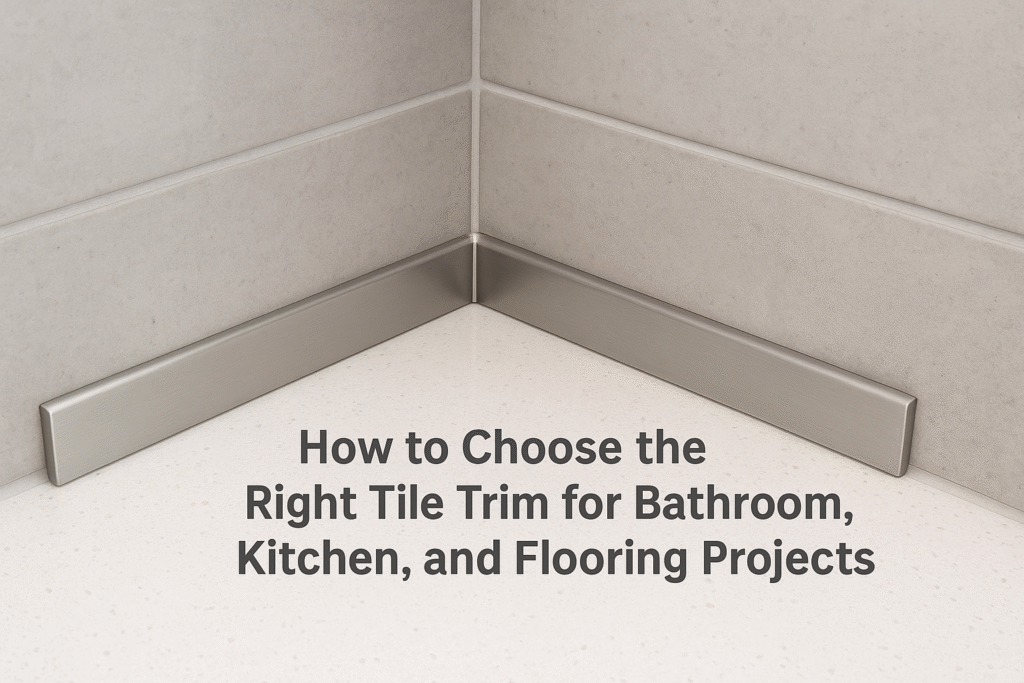
Tile trim plays a major role in modern tile installation. It protects tile edges, prevents chipping, improves waterproofing, and gives your bathroom or kitchen a cleaner, more premium finish.
However, with so many trim options available—L-shape, U-shape, T-shape, bullnose, aluminum, stainless steel—many customers don’t know how to choose.
This guide will help you understand the different types of tile trim and how to select the right one for your project.
1. What Is Tile Trim and Why Do You Need It?
Tile trim is a metal profile designed to finish and protect exposed tile edges.
It ensures:
- Clean and professional edge finishing
- Protection from impact and chipping
- Better waterproof performance
- Smooth transitions between tiles and other materials
- A modern and elegant appearance
Without trim, tile edges can look unfinished and are more likely to crack over time.
2. Most Common Types of Tile Trim
1) L-Shape Tile Trim (Straight Edge Trim)
Best for:
Wall tile edges, external corners, countertop edges, backsplash finishing.
Features:
- Protects sharp edges
- Creates a clean straight-line finish
- Easy to install
2) U-Shape Trim (Channel Trim)
Best for:
Thicker tiles, cabinet edges, shower niches, recessed wall details.
Features:
- Covers both tile edges
- Offers stronger protection
- Ideal for decorative accents
3) T-Shape Transition Trim
Best for:
Floor transitions between tile and wood, SPC flooring, or different height surfaces.
Features:
- Bridges gaps cleanly
- Provides smooth transition
- Prevents tripping
4) Bullnose Trim (Round Edge)
Best for:
Bathrooms, shower areas, children’s rooms.
Features:
- Smooth rounded corner
- Safe for families
- Elegant curved look
5) Stair Nosing Trim
Best for:
Tile stairs, commercial buildings, hotels, malls.
Features:
- Anti-slip design
- LED options available
- Protects stair edges and improves safety
3. Choosing the Right Trim Material
The material you choose affects durability, appearance, and cost.
A. Aluminum Tile Trim
Advantages:
- Lightweight and easy to install
- Rich surface finishing (anodized, powder coating, matte, brushed)
- Budget-friendly
- Suitable for indoor applications
Best for:
Wall tiles, kitchen backsplash, standard residential projects.
B. Stainless Steel Tile Trim
Advantages:
- Extremely durable
- Waterproof, corrosion-resistant
- Luxury appearance (PVD gold, black, rose gold)
- Anti-fingerprint options available
Best for:
Bathrooms, high-humidity areas, hotels, luxury residential, commercial spaces.
| Project Type | Recommended Trim |
| Bathroom | Stainless Steel 304/316 |
| Kitchen Backsplash | Aluminum / Stainless Steel |
| Shower Area | Stainless Steel |
| Floors / Transitions | Stainless Steel T-Trim |
| Commercial Projects | Stainless Steel |
| Budget Home Renovation | Aluminum |
4. How to Choose Trim Height & Thickness
Choosing the right size is crucial for installation quality.
Trim Height (H):
Must match tile thickness:
- 8 mm tiles → 8–10 mm trim
- 10 mm tiles → 10–12 mm trim
- 12 mm tiles → 12–14 mm trim
Trim Thickness:
- Aluminum: 0.6–1.0 mm
- Stainless Steel: 0.8–1.2 mm
The thicker the trim, the stronger and more premium it feels.
5. Ideal Trim Colors for Modern Interiors
Trending colors for 2025 include:
- Brushed Champagne Gold
- Matte Black
- Titanium Gold
- Stainless Silver
- Rose Gold
- Bronze / Antique Copper
- Gunmetal Grey
Choose according to style:
- Minimalist → silver / matte black
- Luxury → gold / champagne
- Warm interior → bronze / copper
6. Professional Installation Tips
To achieve a perfect finish:
Use a high-quality tile saw
Avoid cracking the tile edges.
Place trim before laying the last tile
Ensures alignment.
Use proper tile adhesive
Especially in bathrooms and showers.
Check trim corners
Use matching corner pieces if available.
Protect trim during construction
Avoid scratches from tools or grout.
7. Common Mistakes to Avoid
- Choosing trim height shorther than tile thickness
- Using aluminum trim in wet areas
- Incorrect angle cuts
- Not using a matching color corner piece
- Installing trim after tiles are already set
8. Final Tips: How to Make the Right Choice
The best way to choose tile trim is based on:
1. Location (bathroom/kitchen/floor?)
2. Tile thickness
3. Trim material (aluminum vs stainless steel)
4. Color matching with tile and space design
5. Budget and project requirements
If you’re not sure, our technical team can review your drawing and recommend the exact profile.
Need help choosing the perfect tile trim?
Contact us for free samples, full color charts, and expert recommendations for your project.