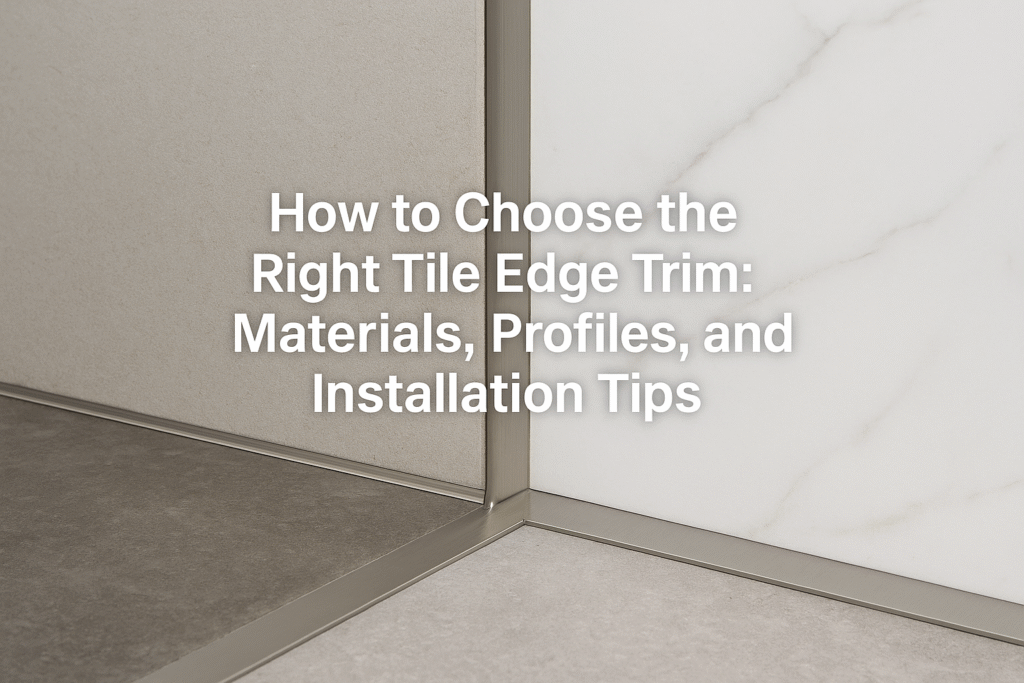
Tile edge trims play a crucial role in finishing tile installations cleanly and safely. Whether used for bathroom walls, kitchen backsplashes, floor transitions, or decorative wall features, the right trim helps protect tile edges, prevent cracking, and elevate the overall aesthetic.
In this guide, we explain how to choose the right tile edge trim, including materials, profiles, sizes, colors, and installation tips.
1. Why Tile Edge Trim Is Essential
Tile edges are vulnerable to chipping, water penetration, and structural stress. Using metal tile trims provides:
- Better protection
- Cleaner finishing
- Improved alignment
- A decorative border
- Long-term durability
Tile edge trims are widely used in bathrooms, kitchens, balconies, commercial spaces, and high-traffic environments.
2. Tile Trim Materials: What to Choose?
① Aluminum Tile Trim
The most common and cost-effective option.
Advantages:
- Lightweight
- Rust-resistant
- Easy to cut and install
- Affordable
- Multiple finishes (anodized, powder-coated, brushed)
Best for: residential and commercial indoor use
② Stainless Steel Tile Trim
Premium and extremely durable.
Advantages:
- High impact resistance
- Anti-corrosion
- Scratch-resistant
- PVD color options (gold, black, rose gold, champagne, bronze)
Best for:
- Luxury bathrooms
- High-end projects
- Commercial, hotel, and retail spaces
- Wet areas that require hygiene and long service life
③ PVC Tile Trim
Economical and flexible.
Advantages:
- Low cost
- Multiple colors
- Easy installation
Not recommended for premium or heavy-use areas.
3. Tile Edge Trim Profiles and Their Uses
Choosing the correct profile is key to a clean finish. Below are the most common types:
① L-Shape Trim (Straight Edge Trim)
- Protects exposed tile edges
- Provides a clean 90° finishing
Best for: wall edges, exterior corners, countertop edges
② U-Shape Trim (End Cap)
- Covers unfinished tile edges
- Ideal for ending tile runs cleanly
Best for: backsplash edges, half-height tiles
③ Square Edge Trim
- Creates modern, straight-line finishing
- Works with thick tiles
Best for: minimalist bathrooms and contemporary interiors
④ Round Edge Trim (Bullnose Trim)
- Soft, curved finishing
- Prevents sharp edges
Best for: children’s bathrooms, schools, hospitals
⑤ Transition Trim
- Connects tile to wood, carpet, or other flooring
Best for: doorways, commercial floors
⑥ Inside & Outside Corner Trims
- Creates clean 90° corners without cutting tiles
Best for: shower niches, corners, edges that need strength
4. How to Choose the Right Size
Most tile trims come in heights such as:
8mm, 10mm, 12mm, 15mm
Choose the trim height that matches your tile thickness.
Rule: Trim height = tile thickness or slightly higher.
5. Color Options for Tile Trims
Choosing the right color helps the trim blend or stand out.
Popular Colors in 2025:
- Brushed Silver
- Black Titanium
- Rose Gold
- Champagne Gold
- Bronze / Antique Bronze
- Matte Black
- Bright Silver Mirror
For luxury designs, PVD stainless steel colors are the top choice.
6. Installation Tips for a Perfect Finish
Measure the tile edge precisely
Select the matching trim height
Apply adhesive evenly under the trim
Press tiles firmly against the trim
Use a trim cutter or metal saw for clean cuts
Ensure perfect alignment at corners
Caulk edges for waterproofing (bathrooms)
A well-installed trim prevents cracking and gives the project a professional appearance.
7. Applications of Tile Edge Trim
Tile trims are widely used in:
- Shower walls and niches
- Bathroom wall corners
- Kitchen backsplashes
- Stair edges
- Balcony edges
- Commercial washrooms
- Retail stores
- Hotel bathrooms and spas
Metal trims enhance both aesthetics and durability.
Conclusion
Choosing the right tile edge trim involves understanding materials, profiles, sizes, and color options. Whether you need a modern minimalist look or a luxurious PVD finish, metal trims play a vital role in achieving a professional result.
If you are looking for aluminum or stainless steel tile edge trims, our factory provides:
✔ OEM & ODM service
✔ Multiple colors and finishes
✔ Custom sizes and profiles
✔ Small MOQ for project use
Contact us for samples, catalogs, and customized production.